Introduction
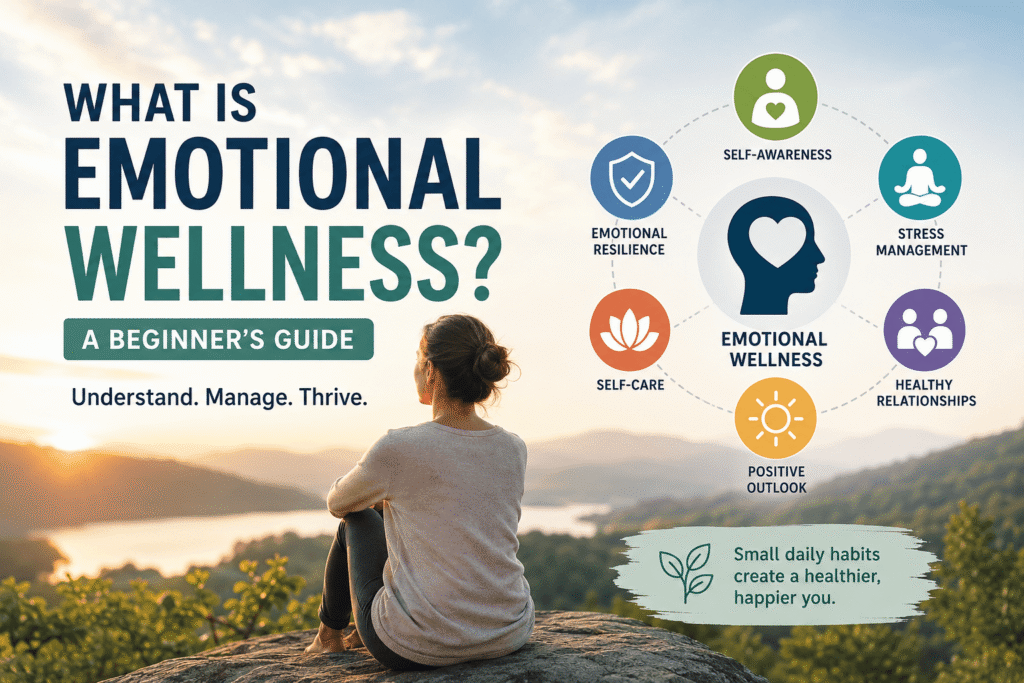
Emotional wellness is more than simply feeling happy. It is the ability to understand, manage, and express your emotions in healthy ways while adapting to life’s challenges with resilience and confidence. Whether you’re dealing with workplace pressure, family responsibilities, financial concerns, or everyday stress, emotional wellness helps you respond thoughtfully instead of reacting impulsively.
Many people focus on physical fitness but overlook their emotional well-being. Yet the two are deeply connected. Strong emotional wellness can improve relationships, boost productivity, enhance decision-making, and even support better physical health.
In today’s fast-paced world, taking care of your emotions is just as important as taking care of your body. This beginner’s guide explains what emotional wellness means, why it matters, and practical ways to build healthier emotional habits that last.
Table of Contents
- What Is Emotional Wellness?
- Why Emotional Wellness Matters
- The Key Components of Emotional Wellness
- Signs of Good Emotional Wellness
- Benefits of Emotional Wellness
- How to Improve Emotional Wellness
- Common Mistakes to Avoid
- Emotional Wellness Checklist
- Helpful Resources
- Frequently Asked Questions
- Final Thoughts
Why Emotional Wellness Matters
Emotional wellness affects every area of life.
Your emotions influence how you think, communicate, make decisions, and respond to challenges. When emotional wellness is neglected, even small setbacks can feel overwhelming. On the other hand, emotionally healthy individuals are generally better equipped to navigate stress and maintain meaningful relationships.
Good emotional wellness contributes to:
- Better communication
- Stronger personal relationships
- Improved workplace performance
- Healthier lifestyle choices
- Greater resilience during difficult times
- Increased self-confidence
- Better problem-solving skills
Imagine two people facing the same stressful work deadline. One reacts with panic, frustration, and burnout. The other acknowledges the pressure, creates a realistic plan, asks for support if needed, and completes the work calmly. The difference often comes down to emotional wellness rather than intelligence or experience.
What Is Emotional Wellness?
Understanding Emotional Wellness
Emotional wellness refers to your ability to recognize, understand, and manage your emotions while maintaining a positive outlook and healthy relationships.
It does not mean avoiding negative emotions.
Everyone experiences sadness, anger, disappointment, fear, and frustration. Emotional wellness is about responding to these emotions in constructive ways rather than suppressing or ignoring them.
People with strong emotional wellness tend to:
- Accept their emotions without judgment.
- Handle stress effectively.
- Build healthy relationships.
- Practice self-awareness.
- Recover from setbacks more quickly.
- Make thoughtful decisions.
- Seek support when necessary.
Being emotionally well doesn’t mean life is perfect—it means you have the skills to navigate life’s ups and downs with greater balance.
The Key Components of Emotional Wellness
1. Self-Awareness
Self-awareness is the foundation of emotional wellness. It involves recognizing your emotions, understanding their causes, and identifying patterns in your behavior.
Ask yourself questions such as:
- Why am I feeling this way?
- What triggered this emotion?
- Is my reaction helping or hurting the situation?
Journaling, mindfulness, and quiet reflection can strengthen self-awareness over time.
2. Emotional Regulation
Emotional regulation means managing emotions in healthy ways rather than allowing them to control your actions.
Healthy strategies include:
- Taking deep breaths before responding.
- Pausing during conflict.
- Practicing mindfulness.
- Going for a walk.
- Talking with someone you trust.
These habits help reduce impulsive reactions and encourage thoughtful responses.
3. Positive Relationships
Humans are naturally social. Healthy relationships provide emotional support, encouragement, and a sense of belonging.
Strong emotional wellness often includes:
- Honest communication
- Active listening
- Setting healthy boundaries
- Showing empathy
- Respecting differences
4. Resilience
Resilience is your ability to recover from setbacks.
Life inevitably brings challenges, including job changes, relationship difficulties, health concerns, or financial stress. Emotional wellness helps you adapt without losing hope or motivation.
Resilient individuals typically:
- Learn from failures.
- Focus on solutions.
- Accept change.
- Stay optimistic.
- Continue moving forward despite obstacles.
5. Self-Compassion
Many people are kind to others but highly critical of themselves.
Self-compassion means treating yourself with the same patience, understanding, and encouragement you would offer a close friend.
Instead of saying:
“I always fail.”
Try saying:
“This is difficult, but I’m learning and improving.”
Research consistently shows that self-compassion supports emotional resilience, reduces stress, and improves overall well-being.
Signs of Good Emotional Wellness
While everyone experiences difficult days, emotionally healthy people often display consistent positive habits.
Common signs include:
- You recognize your emotions instead of ignoring them.
- You recover from setbacks more quickly.
- You maintain healthy boundaries.
- You communicate openly and respectfully.
- You manage stress effectively.
- You adapt to change without excessive fear.
- You maintain realistic optimism.
- You seek help when needed.
- You enjoy meaningful relationships.
- You prioritize self-care.
These qualities develop gradually through practice and self-awareness.
Benefits of Emotional Wellness
Investing in your emotional wellness can create positive ripple effects throughout every aspect of life.
Better Physical Health
Chronic stress affects sleep, immunity, digestion, heart health, and energy levels. Managing emotions effectively supports healthier physical outcomes.
Improved Relationships
Understanding your emotions makes it easier to communicate clearly, resolve conflicts, and build trust.
Greater Productivity
Emotionally balanced individuals often experience:
- Better concentration
- Improved decision-making
- Higher creativity
- Stronger teamwork
- Increased motivation
This can benefit professionals, business owners, students, and leaders alike.
Reduced Stress
Emotional wellness doesn’t eliminate stress—it changes how you respond to it.
Instead of feeling overwhelmed by every challenge, you develop practical coping strategies that protect your mental and emotional health.
Better Decision-Making
When emotions are managed effectively, decisions become more thoughtful and less reactive.
This is especially valuable in business, parenting, leadership, and personal relationships.
How Emotional Wellness Influences Daily Life
Many people don’t notice how much their emotional state shapes everyday experiences.
For example:
- A stressful morning can affect workplace conversations.
- Anxiety may lead to procrastination.
- Poor emotional regulation can create misunderstandings in relationships.
- Positive emotional habits improve confidence and communication.
Small improvements in emotional wellness often lead to noticeable improvements in overall quality of life.